

The end of the train operator? Major U.S. cities bet on driverless trains while Florida reflects both sides of the coin
Translated with AI from the original article in Spanish. Leer la noticia original en español
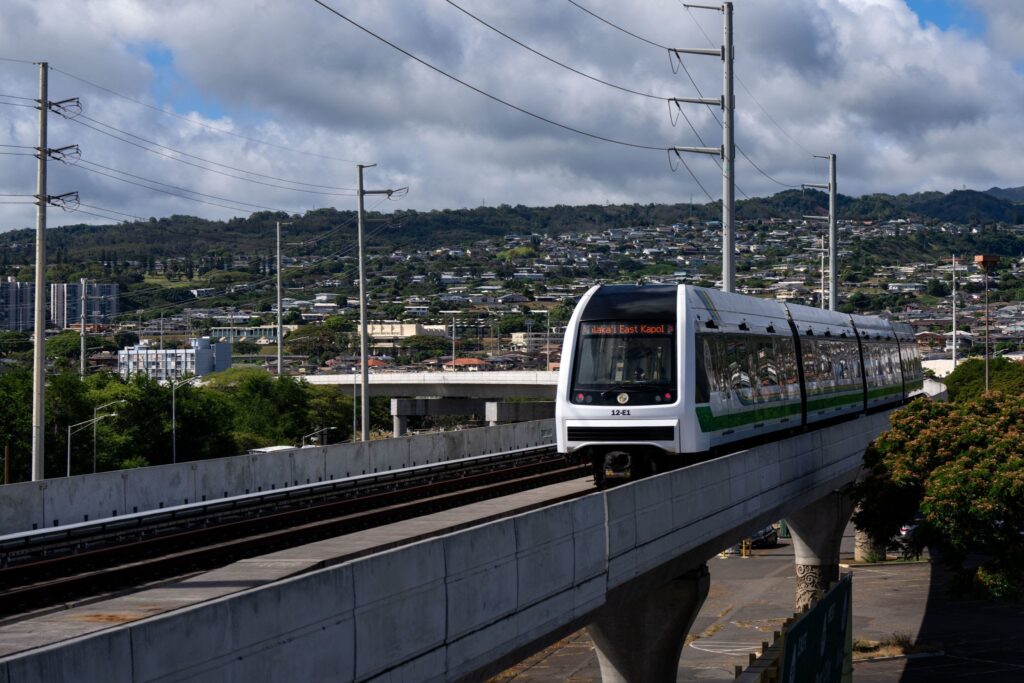
While autonomous vehicles and so-called "robotaxis" are gaining ground on the country's streets, a quiet but multi-billion dollar transformation is brewing underground and on the elevated rails of major American metropolises: the shift toward 100% automated public transit trains, operated without a human conductor in the cab.
Cities like Washington D.C. and Los Angeles are currently leading the most ambitious proposals to incorporate autonomous heavy rail trains into their mass transit networks. However, for residents of Florida, this technology is neither science fiction nor a distant promise: the Sunshine State has been experimenting with automated systems for decades, offering the rest of the nation a valuable lesson that combines resounding success in the south of the peninsula with financial stagnation in the north.
The contrast in Florida: Miami's success versus Jacksonville's decline
Long before major capitals debated the use of artificial intelligence or remote systems in their subways, Florida was already among the national pioneers with two projects born in the 1980s that today live opposite realities.
In the south of the state, the Miami Metromover—inaugurated in 1986—remains consolidated as a model of free and efficient urban mobility. With its electric cars running without a driver on elevated tracks through Downtown Miami and Brickell, the system transports millions of passengers a year, connecting offices, businesses, and residential areas without the need for personnel on board each unit.
Conversely, the north of the state faces the less friendly face of automation. The Jacksonville Skyway, a 2.5-mile automated monorail that began operating in 1989 with the promise of revitalizing that city's downtown, is headed toward suspending operations indefinitely due to severe budget cuts and low ridership. The Jacksonville case demonstrates that eliminating the driver does not by itself guarantee the profitability or success of a network if it is not accompanied by solid urban planning and high demand.
Nationally, the most extensive modern benchmark is currently found in Hawaii: the elevated Honolulu Skyline system, which already operates driverless trains and is projected to reach 19 miles of track upon completion, surpassing the pioneering systems of Miami and Detroit in length.
Multi-million dollar investments in Washington D.C. and Los Angeles
Unlike Florida's elevated light rail systems, the new challenge in the United States consists of bringing fully autonomous driving to heavy rail subway lines with very high passenger density.
In the nation's capital, the board of directors of the Washington Metropolitan Area Transit Authority (WMATA) recently backed a plan of nearly $1 billion that would open the door to operating driverless trains on its busy Red Line by the year 2033.
The project carries a heavy symbolic and historical weight: in 2009, a tragic crash near the Fort Totten station—caused by a failure in the automatic system's sensors—claimed the lives of nine people and forced trains to be operated manually for more than a decade. Today, WMATA CEO Randy Clarke asserts that the technology has evolved under strict federal regulations and that the new plan includes the installation of platform screen doors to prevent falls onto the tracks.
For its part, Los Angeles is evaluating implementing this same modality in the anticipated Sepulveda Pass corridor project, a new subway line designed to cross the Santa Monica Mountains and alleviate one of the most congested traffic bottlenecks in the United States. Cecily Way, the project's planning manager, explained that the use of autonomous trains would allow for the use of shorter convoys but with a much higher frequency of service, drastically reducing wait times at stations.
The safety debate: Technical efficiency versus union warnings
Although transit agencies argue that automated systems reduce human error, optimize energy consumption, and allow trains to be sent every few minutes without depending on work shifts, the initiative faces fierce resistance from labor unions.
John Samuelsen, international president of the Transport Workers Union (TWU), has described these plans as "a catastrophe waiting to happen." The union leader warns that the presence of a human operator or guard on board is irreplaceable when a real emergency occurs inside a tunnel.
"Letting hundreds of passengers depend on self-evacuation during a fire, a power outage, or a mechanical failure in electrified tunnels with a high-voltage third rail represents a grave and unacceptable danger," the union maintains, noting that cameras and microphones connected to a remote control center cannot replace the immediate response of a professional trained at the scene.
As the debate continues in federal offices and local transit boards, the future of rail in the United States seems to be moving irreversibly toward automation, seeking a balance between technological modernization, the economic viability that has tested Florida cities, and the safety of millions of daily travelers.