
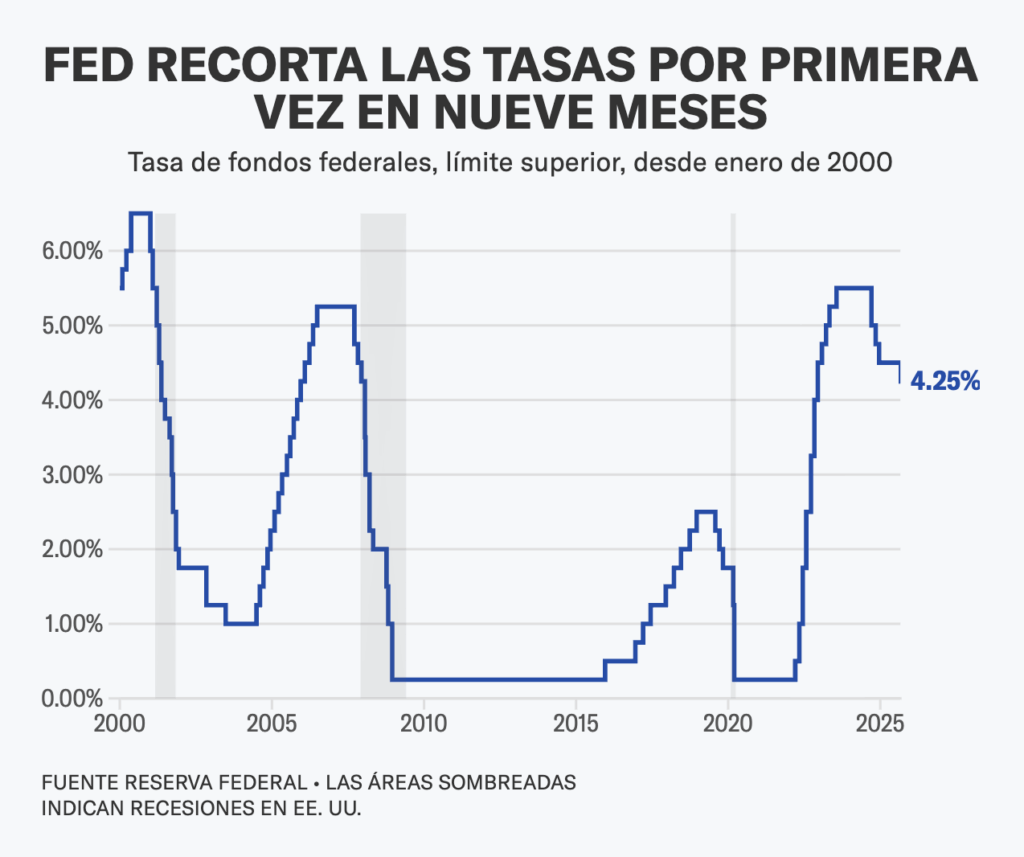
The Federal Reserve cut its interest rate by a quarter point and projected it would do so two more times this year, amid growing concerns at the central bank over the health of the country’s labor market.
Lower interest rates could reduce costs for mortgage, auto, and business loans, boosting growth and hiring.

The bank made that decision, in line with market expectations, in a split vote.
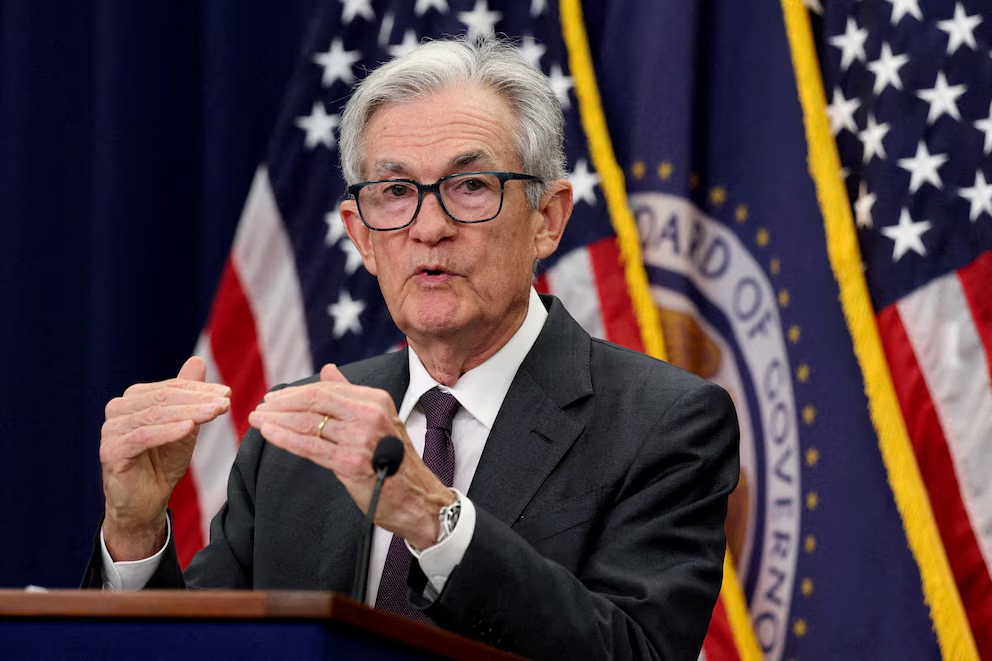
Stephen Miran, recently confirmed as a Fed governor, opposed the decision and expressed his preference for a half-point percentage cut.
The median estimate from all Fed officials forecasts two additional rate cuts this year, up from the previous projection released in June, in a context where the labor market shows signs of weakening while inflation remains elevated.
“Hiring has slowed and the unemployment rate has risen slightly, though it remains at low levels,” officials noted in their statement. This wording represents a downgrade from the July statement, when they described labor market conditions as “solid.”

“In considering further adjustments to the target range for the federal funds rate, the Committee will carefully assess incoming data, the evolving economic outlook, and the balance of risks,” they added.
The central bank’s monetary policy committee also showed greater optimism about U.S. economic growth, forecasting 1.6% this year compared to the 1.4% projected in June. It made no changes to its unemployment or inflation expectations.
Crossroads for the Fed Amid Political Pressures
The Fed’s decision came after months of intense pressure from Trump to lower rates and amid growing concerns over political influence on the central bank, an independent institution.

The Federal Open Market Committee (FOMC), the Fed’s 12-member body responsible for setting rates, is navigating a period of turbulence.
Though Trump has stopped threatening to fire Fed Chair Jerome Powell, the president is now targeting FOMC Governor Lisa Cook for dismissal over a mortgage fraud allegation.
The Federal Reserve typically keeps interest rates high to sustainably control inflation.
But this time, concerns over employment prevailed, even as inflation remains above 2%.
Indeed, the Fed said in a statement that “risks to employment have increased,” even if inflation “has risen and remains somewhat elevated.”
The institution noted that job creation has slowed and the unemployment rate has risen, though “it remains low.”
According to data released last week, the Consumer Price Index—a key inflation indicator—rose to 2.9% in August, the highest level since the beginning of the year.