

Underwater: Why Palm Beach and the Treasure Coast Flood, Who Is Responsible, and What Residents Should Do
Translated with AI from the original article in Spanish. Leer la noticia original en español
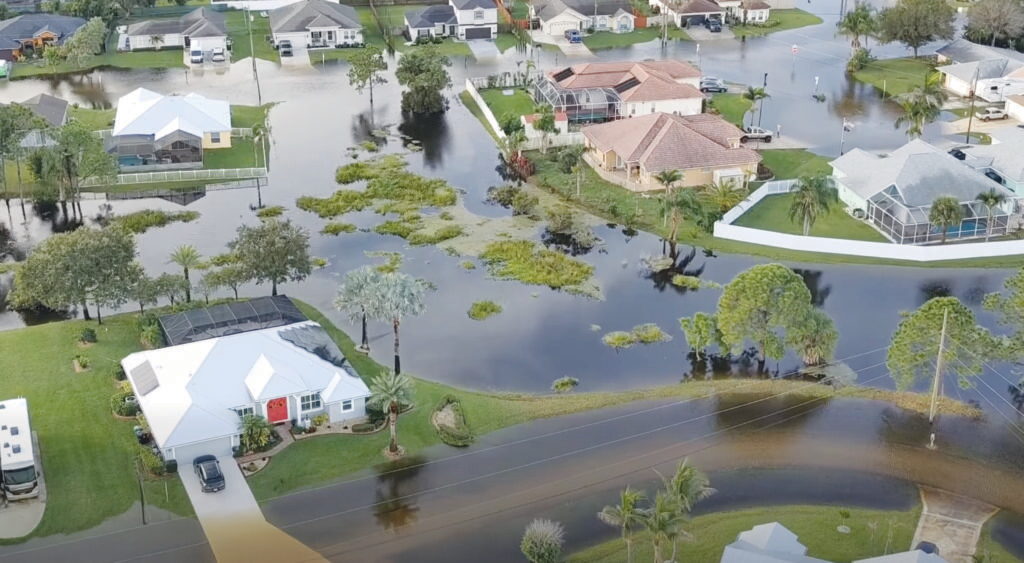
Comprehensive analysis of flooding in Palm Beach, St. Lucie, and Martin: geographic factors, drainage failures, government responsibilities, and a citizen's guide.
Recurrent torrential rains and tropical storms in Southeast Florida are once again leaving behind a familiar and distressing scene: flooded neighborhoods, vehicles floating on main avenues, and residents trapped in their homes.
Communities throughout Palm Beach County and the Treasure Coast (Martin, St. Lucie, and Indian River counties) face episodes where water rises at a speed that challenges both the patience of citizens and the existing civil infrastructure.
To understand why an afternoon of heavy rain causes entire road arteries to collapse, it is necessary to analyze the local geography, the complex web of drainage, and the challenges posed by excessive growth in the state.
1. Why do they flood so easily?
The water vulnerability of Palm Beach and the Treasure Coast is not due to a single factor, but to the convergence of natural causes and urban planning decisions:
- Flat topography and high water table: Much of South Florida rests on land practically at sea level. The water table (the underground water layer) is just a few centimeters from the surface. When the soil is saturated by previous continuous rains, it loses its ability to absorb water (zero infiltration), accumulating every millimeter of precipitation on the asphalt and grass.
- Accelerated urban waterproofing: The construction boom has replaced wetlands and grasslands with concrete, roofs, and parking lots. Surface water that once filtered naturally now runs in mass toward drains and ditches not designed for extreme rainfall peaks.
- The "King Tides" effect and coastal winds: During astronomical high tides or wind-driven storm surges, the ocean and the Intracoastal Waterway rise to levels higher than the storm drain gates. When the outside level is higher than the inside, the canals cannot empty by gravity into the sea, and the water begins to flow back into the streets.
- Design of swales and temporary retention: In many cities (such as Port St. Lucie or unincorporated areas of Palm Beach), the grass swales in front of houses are specifically designed to retain water and prevent it from entering living rooms. However, in the face of severe stationary storms, the system exceeds its retention capacity, and runoff reaches driveways and garages.
2. Lessons from the past: A brief history of flooding
The water problem in South Florida dates back more than a century:
- The hurricanes of 1926 and 1928 (Okeechobee): Foundational catastrophes that caused thousands of deaths after the overflow of Lake Okeechobee, forcing Congress and the U.S. Army Corps of Engineers (USACE) to embank the lake with the Herbert Hoover Dike and intervene in the basin.
- Hurricanes Frances and Jeanne (2004) and Wilma (2005): They hit Martin and St. Lucie counties head-on, saturating the soil to historic levels and collapsing the drainage of inland communities for weeks.
- Tropical Storm Fay (2008): Left more than 500 mm (20 inches) of accumulated water in areas of St. Lucie and the entire Treasure Coast, revealing bottlenecks in secondary canals that remained stagnant for days.
- Unnamed torrential events and recent storm impacts: In recent years, episodes of stationary subtropical rains and indirect impacts from storms and record tidal flooding have shown that a major hurricane is no longer needed to submerge key avenues in Palm Beach Gardens, Wellington, or Port St. Lucie.
3. Who is responsible for what? The 3-level system
One of the biggest points of neighborhood frustration is not knowing which entity to demand solutions from. Water management in South Florida functions as an interconnected three-level system:
| System Level | Primary Responsible | What do they manage? |
| Primary (Regional) | SFWMD (South Florida Water Management District) and USACE | Main canals, dikes, large-scale pumping stations, and ocean outlet gates. |
| Secondary (Zonal) | Counties, Cities, and Special Drainage Districts (e.g., Lake Worth Drainage District) | Intermediate canals, storm sewers on main avenues, public connection ditches between neighborhoods, and primary collectors. |
| Tertiary (Community) | Homeowners Associations (HOAs), developers, and owners | Internal artificial lagoons (retention ponds), drainage pipes in gated communities, private grates, and residential swales. |
If a street within a private community does not drain, the obstacle is often in the HOA's internal pipes or pumps before reaching the district's canals. Conversely, if the SFWMD's primary canals are collapsed or closed due to high tide, the secondary and tertiary systems are blocked by retroactive effect.
4. What have the counties done and what remains to be done?
Both Palm Beach County and Martin and St. Lucie counties have invested millions in resilience and mitigation projects, such as:
- Pre-discharge of canals: The SFWMD and local districts preventively lower canal levels days before announced storms to create a storage "cushion."
- Modernization of pumps and mechanical gates: Replacement of gravity gates with mechanical pumps that expel water even against high tides.
- Restoration of wetlands and storage reserves: Projects such as the Comprehensive Everglades Restoration Plan (CERP) and local initiatives to retain excess water away from urban centers.
The pending debt: The pace of real estate development and the change in rainfall patterns continue to outpace the speed of public works. There is often a lack of regular maintenance on local ditches, removal of invasive vegetation in secondary canals, and rigorous inspections of private systems in residential developments.
5. Survival and action guide for residents
Faced with the hydrological vulnerability of our region, individual and community preparation is essential:
Prevention before the rains
- Keep swales and grates clean: Do not dump pruning waste, leaves, or trash in swales or drains; they are the number one cause of clogging.
- Purchase flood insurance (NFIP or private): Standard homeowners insurance does not cover flooding from rising water. Remember that it usually requires a 30-day waiting period to activate.
- Document your property: Take photos and video of appliances, floors, and vehicles before the rainy season to speed up processing with adjusters.
Safety during the emergency
- "Turn Around, Don't Drown": It takes just 6 to 12 inches of moving water to sweep away a car. If you cannot distinguish the curb from the sidewalk, assume the road is impassable.
- Beware of hidden dangers: Stagnant water carries fuel, sewage waste, harmful wildlife (snakes and alligators), and downed power lines that can electrify the body of water.
- Report blockages: Notify your municipality or county's Public Works division about blocked drains or anomalies in community lagoons before they collapse.
To report dangerous water accumulations, clogged drains, or request assistance during weather emergencies, local and district authorities have specific direct service lines.
Emergencies and Regional Canals (Entire Area)
- Immediate Risk to Life or Safety: Call 911 (rescues, downed lines over water, people trapped in vehicles).
- Helpline and Community Resources: Dial 211 (shelters, basic assistance, food, and post-emergency needs for Palm Beach and the Treasure Coast).
- South Florida Water Management District (SFWMD):
- Control and reporting of regional primary canals: (561) 686-8800 or 1-800-432-2045
- Web: sfwmd.gov
St. Lucie County
- County Flood Hotline (Road & Bridge Division):
- Phone: (772) 462-2511 (monitored 24/7 for reports of rapidly rising water).
- Email:
flooding@stlucieco.gov
- City of Port St. Lucie:
- Citizen Service Center (1PSL): (772) 871-1775 (press option 2 for Public Works).
- Mobile App / Web: 1PSL app or at cityofpsl.com.
- City of Fort Pierce:
- Public Works: (772) 467-3794
- Online reports / App: Fort Pierce Works or SeeClickFix.
- Alert System: Subscribe to Alert St. Lucie.
Palm Beach County
- Emergency Information Center (PBC EOC):
- Phone during storms/events: (561) 712-6400
- Web and preparation information: readypbc.com
- Drainage in Unincorporated Areas (Road & Bridge / Flood Info):
- Phone: (561) 233-5374
- Email:
floodzone@pbc.org
- Lake Worth Drainage District (LWDD):
- Secondary canals between West Palm Beach and Boca Raton: (561) 498-5363
- Main Municipal Public Works Departments:
- West Palm Beach: (561) 822-2222
- Boca Raton: (561) 416-3340
- Delray Beach: (561) 243-7000
- Boynton Beach: (561) 742-6200
- Alert System: Register for AlertPBC.
Martin County
- Martin County Emergency Management:
- Main office / Disaster inquiries: (772) 287-1652
- Citizen information line during storms (EOC): (772) 287-1652
- Public Works and Road Maintenance (Unincorporated areas):
- Phone: (772) 288-5400
- City of Stuart:
- Public Works and Sewer: (772) 288-5398
- Alert System: Subscribe to the official AlertMartin system.
Images Port St. Lucie Police Department