

High Gas Prices: The Fuel of Inflation and How to Protect Your Wallet
Translated with AI from the original article in Spanish. Leer la noticia original en español
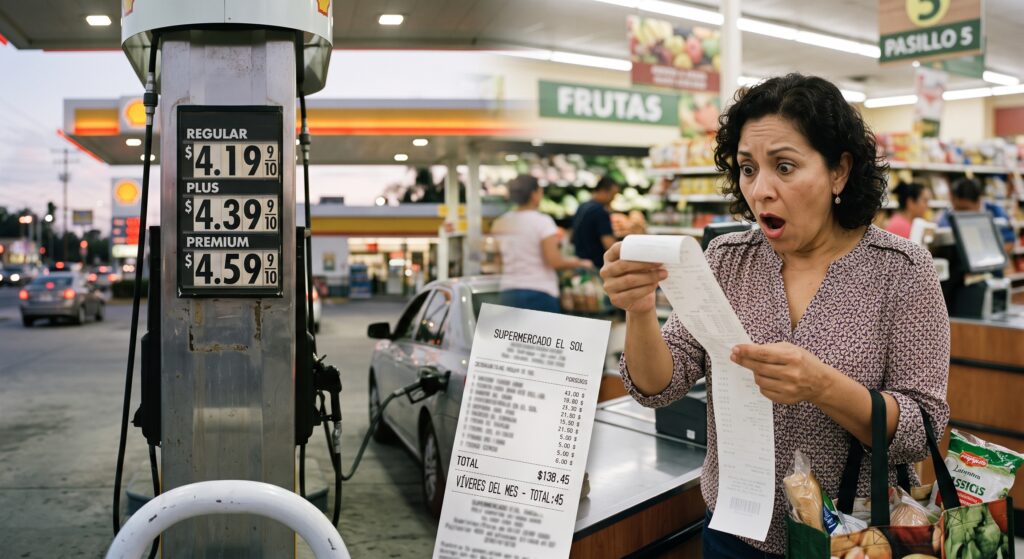
The increase in fuel prices is driving up the cost of living and making the basic food basket more expensive. We analyze the impact on the economy and share practical tips to save on gasoline today.
Filling up the vehicle's tank has become one of the most stressful moments for the family budget. In an environment where the widespread increase in the cost of goods and services shows no signs of slowing down, the escalation in liquid fuel prices acts as a catalyst that accelerates the erosion of household purchasing power and shakes the foundations of global trade.
Fuel is not an isolated expense: it is the lifeblood that moves the productive economy. When the price per gallon rises at service stations, it triggers a chain reaction that ends up hitting every aspect of daily consumption.
The domino effect on the general economy
The increase in fuel prices does not only affect private drivers; its most severe repercussion is manifested at the macroeconomic level through commercial logistics:
- Increased supply chain costs: Practically all products that reach supermarkets, stores, and pharmacies travel on wheels or via freight transport. As the cost of diesel and gasoline rises, transport companies pass that extra cost on to distributors and retailers.
- Increase in the basic food basket: Agriculture depends on fuel not only to move harvests to urban centers but also to operate tractors, harvesters, and heavy machinery. The direct result is a rise in essential products such as dairy, meat, grains, and fresh vegetables.
- Wage pressure and profit margins: For small and medium-sized businesses, the increase in shipping and freight rates drastically reduces profit margins, slowing down hiring and limiting business investment.
Collateral effects on daily life
Beyond macroeconomic figures, the rising cost of fuel modifies the social and financial dynamics of families:
- Reduction in discretionary spending: The money a household is forced to allocate to fuel is taken directly from areas such as entertainment, dining out, clothing, or tourism, contracting the service and hospitality industries.
- Debt for current expenses: With wages growing slower than the cost of living, more and more people are turning to credit cards to cover daily gasoline costs, paying high interest rates for non-recoverable consumption.
- Disproportionate impact on essential workers: Those who depend on their vehicles to generate income—such as ride-share drivers, delivery workers, construction personnel, or healthcare workers in suburban areas—absorb an immediate cut in their net income.
Practical tips to maximize every gallon
Although geopolitical and commercial factors are beyond the control of citizens, implementing conscious changes in driving and maintenance can generate savings of between 10% and 20% in monthly consumption:
- Maintain correct tire pressure: Driving with underinflated tires increases rolling resistance and forces the engine to consume 2% to 3% more fuel.
- Moderate and consistent driving: Aggressive acceleration and sudden braking in urban traffic increase fuel consumption exponentially. Maintaining moderate speeds on the highway (around 55–65 mph) and using cruise control optimizes engine performance.
- Reduce unnecessary weight and manage air conditioning: Carrying excessive weight in the trunk reduces a car's efficiency. Likewise, at low speeds in the city, it is preferable to lower the windows slightly, while on the open road, it is more efficient to keep them closed and turn on the air conditioning to reduce aerodynamic drag.
- Take advantage of mobile apps and rewards: Using digital tools (such as GasBuddy, Waze, or wholesale club apps) allows you to compare prices between nearby stations before heading out. Combining this with supermarket rewards programs or cashback credit cards for fuel helps cushion the financial blow.
- Plan and consolidate trips: Grouping weekly errands into a single trip avoids multiple trips with a cold engine, at which point the vehicle burns more gasoline per mile traveled.