

Epidemiological Alert: Florida Faces Its Largest Dengue Outbreak in Decades
Translated with AI from the original article in Spanish. Leer la noticia original en español
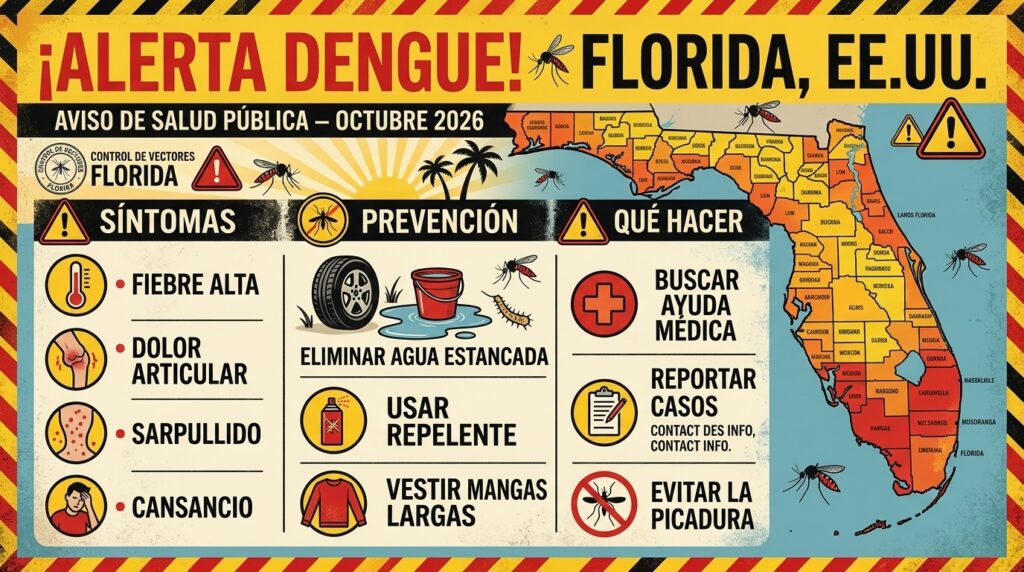
Florida is currently at the epicenter of a public health crisis after recording the largest dengue outbreak in the continental United States in more than a decade.
According to the latest epidemiological reports for 2026, the state has confirmed 252 cases of local transmission. The severity of this surge became evident following the death of an elderly woman residing in Tampa in early September, which has triggered alarms among health authorities, focusing mitigation efforts on Hillsborough County and its surroundings.
The accelerated increase in local infections, driven by favorable weather conditions and persistent populations of the transmitting mosquito, has led health experts to warn that this level of outbreaks could become the "new normal" for the state.
How to Identify Symptoms
Dengue, colloquially known as "breakbone fever" due to the intensity of the pain it produces, presents a clinical picture that usually appears between two and seven days after the bite. It is crucial to be alert to the following symptoms:
- High and sudden fever (up to 40°C / 104°F).
- Intense headaches and sharp pain behind the eyes.
- Severe muscle and joint pain.
- Nausea, vomiting, and the appearance of a skin rash.
- Warning signs: After the fever subsides, symptoms of severe dengue may develop, which include intense abdominal pain, bleeding gums or nose, and extreme fatigue, requiring emergency medical attention.
Recommendations to Avoid Contact
Prevention is the main tool to curb the spread of this virus, so environmental control is fundamental:
- Eliminate breeding grounds: Inspect your property regularly and empty or discard any containers that accumulate standing water (flowerpots, tires, buckets, or toys), as mosquitoes breed there.
- Personal protection: Use approved insect repellents when outdoors and choose to wear loose-fitting clothing with long sleeves and pants.
- Secure your home: Keep door and window screens in optimal condition to block the entry of insects.
Recommendations for Recovery
For those who have already contracted the disease, careful management can prevent the condition from worsening:
- Early medical attention: There is no specific antiviral treatment for dengue, so timely detection and professional monitoring significantly reduce fatality rates in severe cases.
- Hydration and rest: Get absolute rest and drink plenty of fluids to counteract dehydration caused by fever and nausea.
- Safe pain management: Use only acetaminophen-based medications to control discomfort. The use of aspirin, ibuprofen, or other non-steroidal anti-inflammatory drugs (NSAIDs) must be strictly avoided, as they can increase the risk of hemorrhaging.
Have you noticed an unusual increase in mosquitoes in the green areas of your neighborhood or community over the last few weeks?